

By Andrés Moya
Look at the streets. What do you see? People standing up for housing, education, and healthcare. Migration. The climate crisis. Skyrocketing prices. Catastrophes…
It feels like the world is broken—much like a high-mileage car that starts breaking down in all sorts of different places.
In this episode, some young people talk about this and wonder: is it possible to imagine a different world—one that’s better put together?
(Spoiler: yes, it is!)
The thing is, not only is it possible—it’s already happening! Gone are the days when we believed that being “ecological” meant making sacrifices—that protecting the environment required giving up well-being and prosperity. We now know that there are ways to do things that are ecologically sound while also being economically and socially just. There are plenty of examples; here are a few:
This is not the work of a single organization or movement. It involves many different people, in various places, who are thinking about and discovering better ways to live.
But if this exists… why isn’t it more widely known, and why doesn’t everyone live this way?
There is a root cause—one that lies behind many other issues: our economic system is broken.
Several decades ago, we adopted economic rules that prioritize interests that are not beneficial—or are even harmful—while ignoring or blocking things that are essential for a healthy and prosperous world.
But you know what? This, too, can be changed.
So, where does all this begin? Here’s a very interesting idea: in Spain, some people have developed a ten-point plan for political parties—a plan that could be implemented right away and would simultaneously support the energy transition, agriculture, housing, and pensions. Can you imagine…?
However, this plan is not enough.
- We must produce renewable energy, but without falling into the trap of causing a surge in electricity demand to power new data centers for artificial intelligence (tunubesecamirio.com).
- New energy should primarily be used to replace the consumption of fossil fuels; furthermore, it is necessary to reduce the demand for electricity and many other resources (beyondgrowth.es).
- It is urgent to build public housing, while also capping prices and preventing speculation (huelgaporlavivienda.org).
- We must protect pensions, as well as universal public services such as healthcare and education, for present and future generations (sindicatodeestudiantes.net, educadoraspleimadr.wixsite.com).
- Etc. Etc. All of this through open, participatory debates, while defending the well-being of society against corporate interests.
All these mobilizations are essential—and there need to be even more. We must apply pressure from many directions at once, until that we manage to overcome the inertia and break the current deadlock, so we can begin shifting the system toward real, positive change.
Of course, none of this is easy. There are many forces of inertia and vested interests pushing to keep things exactly as they are. If we want this to happen, we need massive social mobilization—spreading these initiatives across our regions and pressuring governments and corporations to drive them forward. But you know what? This is already happening…
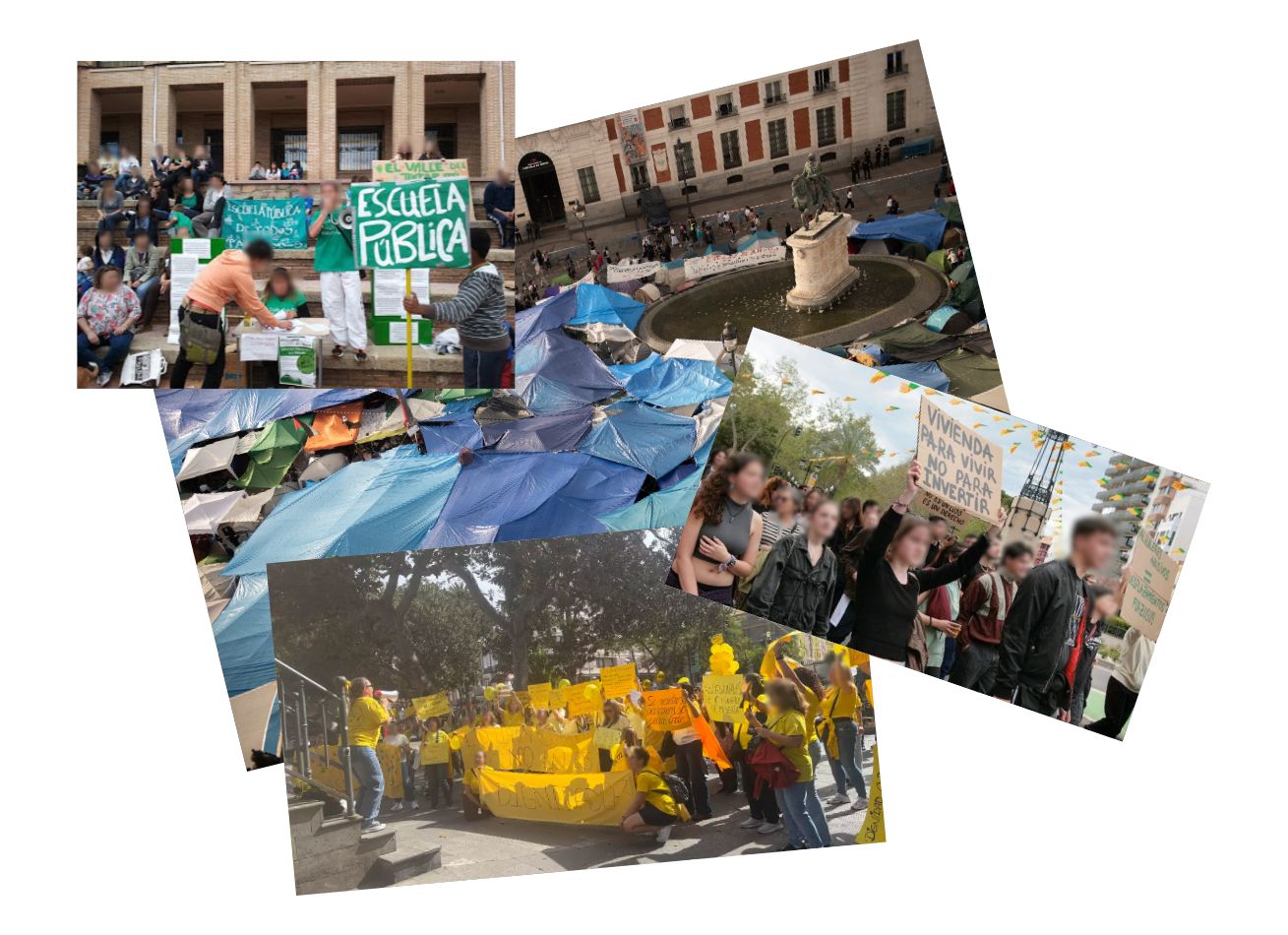
Does it make a difference? Just ask the group of young people who started a protest in Serbia two years ago and have now reached the government. If they could do it there, why not here, too?
Choose your movement—or any of the projects mentioned above—get involved, and take action.
See you in the streets!
Return to WEAll Iberia