
Systems change in the AI revolution requires more than aggregate economic growth; it demands a fundamental reckoning with who benefits, who bears the cost, and whether those bearing the cost had any say in the arrangement. In this article, Christine Akinyi Omondi argues that union participation is central to this reckoning, as it recognises workers not as passive subjects of technological change but as active agents possessing power and leverage within it.
Christine Akinyi Omondi is a postgraduate researcher and legal professional whose work focuses on inclusive governance, social justice, and economic transformation. Her research is informed by wellbeing economy principles and examines how participatory democracy and worker voice can contribute to more equitable, sustainable, and people-centred economic systems.
Who gets to write the Rules
Cobalt is essential to the lithium-ion batteries that power the devices running artificial intelligence which is critical in the low-carbon transition as per the Paris Agreement. Data shows that DRC produced 73% of World total in mined cobalt in 2025, with areas like Lualaba having about 150,000-200,000 artisanal and small-scale miners (ASM), extracting a significant share and supply minerals at a much lower commercial cost than industrial mining. The UNICEF in 2012, also reported that at least 40,000 children were taking part in artisanal mining.
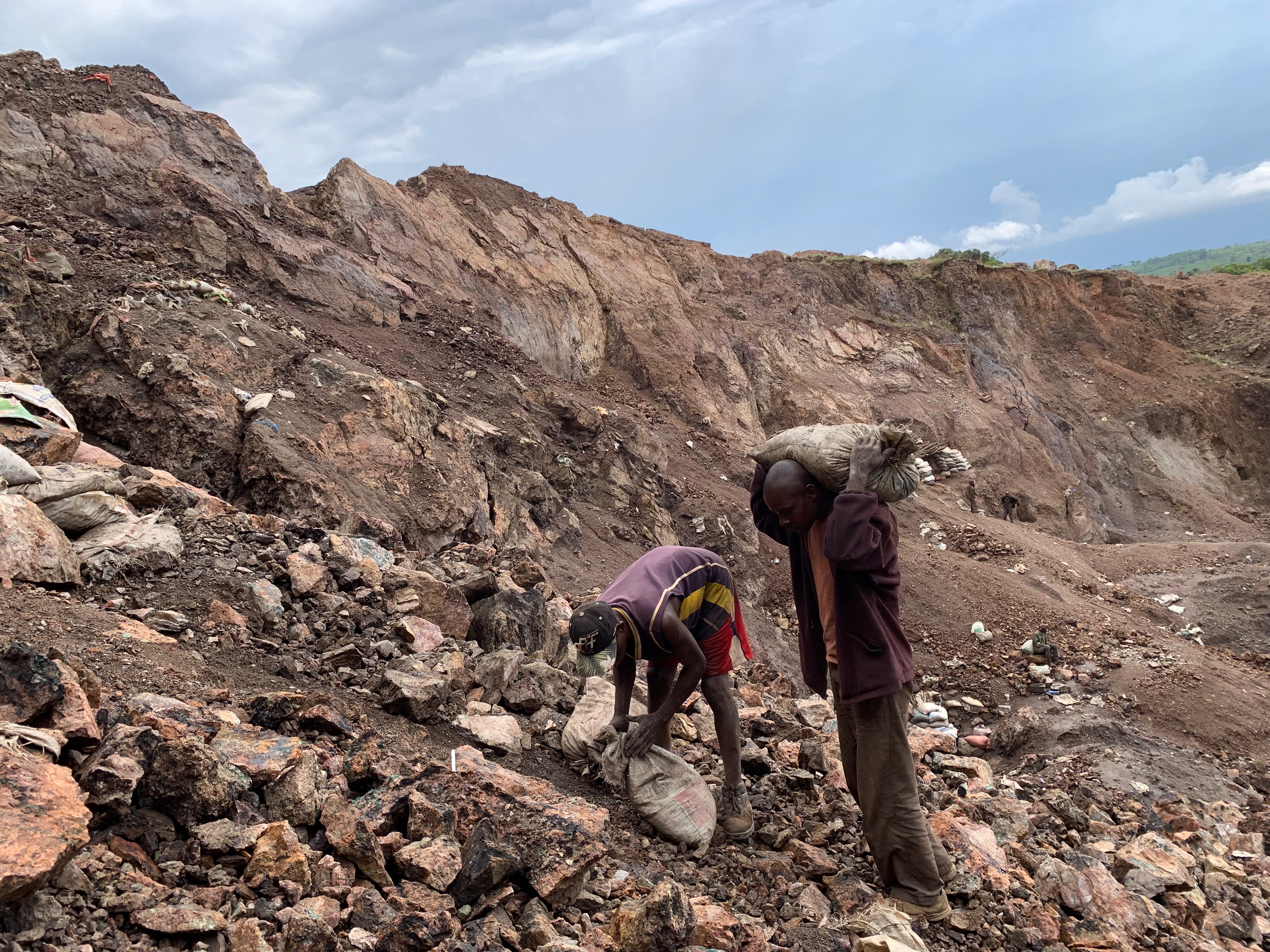 By The International Institute for Environment and Development – Flickr, CC BY 2.5, via Wikimedia
Simultaneously, there are “AI Sweatshops“ in Kenya, which hire young students and graduates to train AI systems. This is due to Kenya’s tech-savvy, literate population, but with a high rate of unemployment. Kenya also has power stability, making it attractive for global AI companies. Their tasks include sorting, labelling and annotating images, videos and text, making them the invisible backbone of AI’s rapid expansion, shaping everything from chatbots to surveillance systems. However, their pay ranges from as little as $5.42 a day to label thousands of videos, to about $1.32 and $2 per hour. Several workers have reported that although they were entitled to attend sessions with “wellness” counsellors, the sessions were unhelpful and rare due to high demands to be more productive at work.
This is not a coincidence, but a pattern, and precisely what the wellbeing economy must confront urgently, while the rules are still being written. The AI Economy, celebrated as the fourth Industrial revolution, seats on the most exploited labour in the world. Workers with no safety equipment; no contracts and have no collective voice.
The right to Dignity vis-à-vis GDP Growth

Figure 2: A man showing mental distress from constant exposure to harmful content online. His family, in the background, progressively disappears. Gloria Mendoza / https://betterimagesofai.org
The assumption by mainstream economics that technological progress and free markets will benefit everyone, including the reduction of pollution, growth in agricultural land yields, and resource efficiency improvements has since failed. Instead, the projections of the Limits to Growth report have proven broadly accurate. Empirical data aligns with scenarios indicating a halt in welfare, food and industrial production, thereby affirming that “if humanity kept pursuing economic growth without regard for environmental and social costs, global society would experience a sharp decline in economic, social, and environmental conditions within the twenty-first century.” This is exactly what the AI revolution risks doing. Currently, efficiency gains are captured at the top whereas the costs attached to it including environmental destruction, worker exploitation, are trickling to the bottom, amongst people who had no say in the decisions that produced them.
An overview on the economic paradoxes exposes these mainstream failures: Jevons Paradox (increased efficiency does not decrease resource use), which directly applies to the use of more cobalt by AI chips; the Easterlin Paradox (increasing income and wealth does not necessarily lead to higher levels of wellbeing), clearly demonstrated by the current artisanal extraction practices, which generate serious environmental and health risks, including evidence of exposure-related oxidative DNA damage in children – the paradox being that DRC’s GDP is increasing. On the other hand, the Lucas paradox explains that, in a globalized economy, wealth does not flow from rich to poor nations, but vice versa.
The gig economy and the cobalt supply chain therefore, are vivid manifestations of this. Companies generating unprecedented profits produce workers whose wellbeing is not commensurate to the financial returns which overwhelmingly flow to rich economies while the environmental and human costs are borne by the capital poor economies. These are structural outcomes of power imbalances.
A Wellbeing Economy
Part of the explanation for the growing gap between rising GDP and stable wellbeing is that some types of consumption lead to increases in wellbeing, but this is being eroded by costly negative externalities that depress health and wellbeing. This therefore plainly calls for the rethinking of economics, since GDP growth does not equal to the wellbeing of a nation. A wellbeing economy, is succinctly the different economics.
It has the fundamental goal of delivering good mental and physical health, greater quality, fairness and sustainability, and a flourishing natural environment. A wellbeing economy reorients around predistribution by ensuring fair value sharing from the outset, rather than relying on complex redistribution after the damage is done. When this is abandoned, value is extracted and harm is left behind as illustrated with ASM Mining in DRC and AI Sweatshops in Kenya.
Unions and Participatory Governance
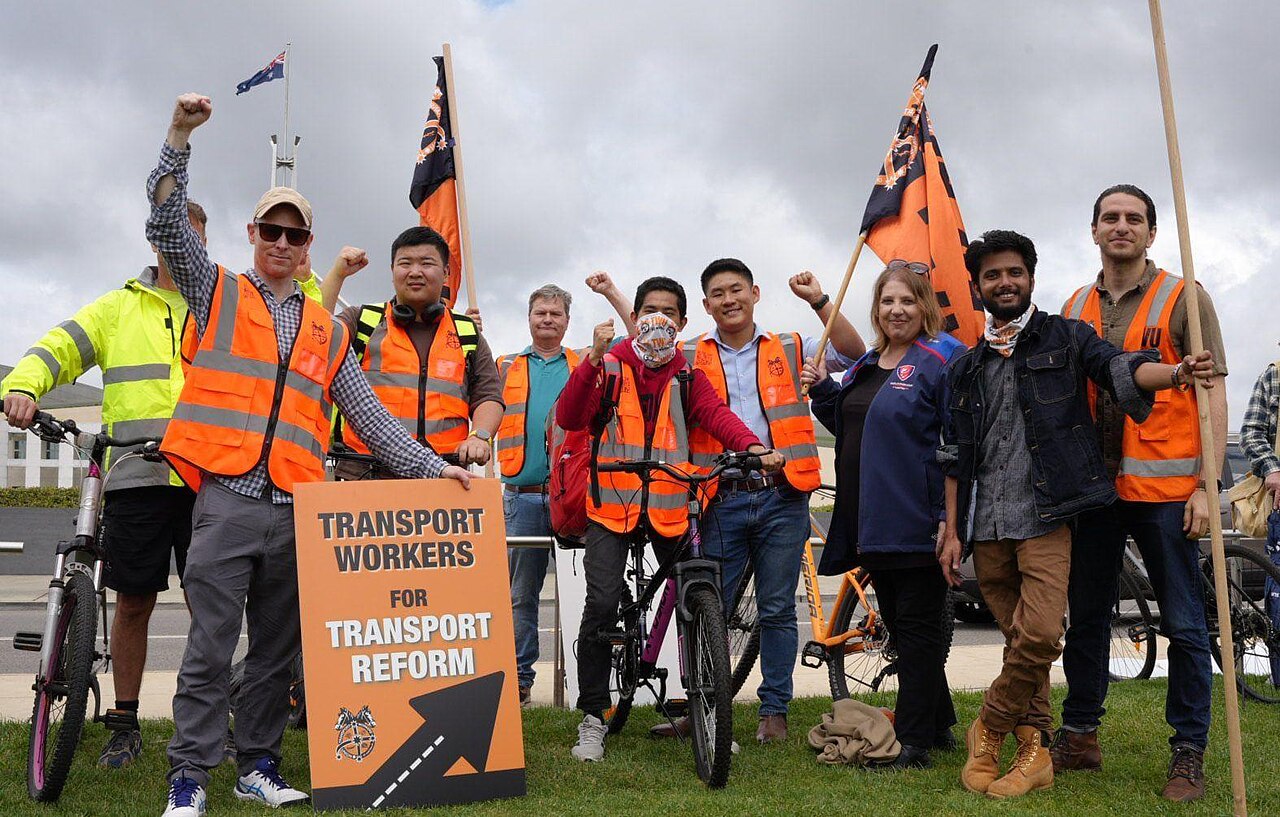
By Oan Nbn – Own work, CC0
Participatory governance seeks an extension of collective voices into the spaces where it has been most systematically denied. Over time, unions have been known to raise wages for workers and formed an important part of social capital, by bringing power to the people in workplaces and in governments. It is for this reason that unions matter because they can expand the workers collective voice and push for legal recognition while demanding for minimum standards on pay, working time and conditions.
In the DRC, advocacy organisations such as African Resources Watch (AFREWATCH) document abuses and push for formal recognition of ASM miners’ rights, which can create the foundation for collective bargaining where none previously existed. In 2016, their exposé on human rights abuse on the cobalt sector in the DRC attracted sufficient attention and is at the core of international responsible sourcing efforts. The publication explicitly highlighted the connections between major global brand companies and the use of child labourers at ASM sites and served as the basis for a major lawsuit in the United States.
Comparatively, in the UK, the Independent Worker’s Union of Great Britain (IWGB) has successfully organised gig workers to seek systems change. Even though the gig economy considered too dispersed and informal to unionise, IWGB have lobbyied, petitioned and even successfully claimed for the recognition of most gig workers as workers with rights to the National minimum Wage and holiday pay. They seek for compensation for the harms caused to workers in the sector. These are not theoretical experiments. They are living demonstrations that collective worker power can be rebuilt outside traditional industrial structures and that participatory mechanisms can reach the workers who mainstream economics rendered invisible.
Conclusion
Systemic challenges are deep rooted, persistent, connected, and structural, but it is the sole reason why the impetus for successful system innovation does not rely on a single organisation nor individual. In the AI revolution, for systems change to bring about lasting and upstream change, there is need to alter the underlying structures and supporting mechanisms which make the system operate in a particular way. It demands different questions to economics; not only, how much does this grow the economy? but who benefits, who bears the cost and did those bearing the cost have any say in the arrangement. This is why participation of workers through unions have the capability of recognising workers as active agents by acknowledging their power and leverage. When unions are at the table, they get to ensure the people most affected write the rules, and get a voice in writing them while shaping the technology that they power.