
By: Nela Cadiñanos Gonzalez
It’s been four months since the COP30 in Brazil. I know it’s long in ‘social media time’ but I wanted to take the opportunity to reflect upon the journey, and invite everyone to join my virtual masters project defense happening on April 8th at 5pm CET, which will be around the topic of soil health and post-growth climate policy. You can join the zoom event here – now enjoy my less formal reflections down below!
Immersing myself into the Amazon rainforest, after attending the COP, was refreshing. The contrast in both scenarios led me to conclude that, if we truly want thriving ecosystems and collective flourishing, we might as well start by re-foresting our own ideas. By going beyond financial metrics, and giving “wealth” a whole new meaning.
One that sees wealth as collective property, will want to educate future generations to maintain balance on Earth.
One who sees wealth in preserved territories, will holistically care for the state of the soils, water and biodiversity.
One who sees wealth in all Life, will listen to the wisdom of Indigenous leaders. Those whose understanding of the land is deeply intimate.
Those whose relationship to the Amazon rainforest is a reciprocal, life-sustaining circular interaction of love and care.
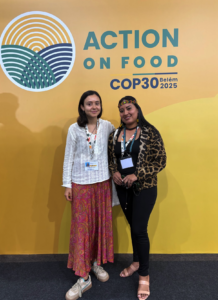
After attending the COP30 in Belém, Brazil, as a fully funded young delegate primarily representing the Save Soil movement, the real experience of Brazil started for me. I had always dreamt of visiting the Amazon rainforest, and I simply could not leave the country after attending the “COP of the Amazon”, without grounding myself in that which I am aiming to protect. It just did not make sense.
Whether gracefully, or karmically, I was fortunate enough to receive a 600euro compensation for my delayed flight into Belem, which was more than enough to cover my travel into the Amazon.
At COP, I met another young soil enthusiast coming from a traditional community in Marajó island, who invited me to her home. The day after the conference finished I started my rainforest journey on a boat with her dad, who works transporting açaí berry into Belém. Leaving the city behind was refreshing.
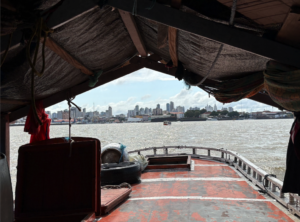
The boat was slow, so I could witness the world’s richest ecosystem from within. After +2 weeks of being primarily in the conference rooms, looking at screens and having minimal exposure to the natural elements, at a crazy fast-paced schedule, the slowness of the old boat allowed me to reflect upon a roller-coaster COP experience.
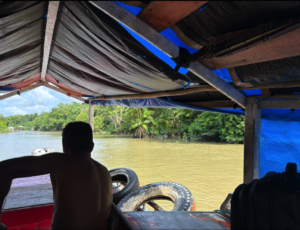
And that’s where something in me shifted: I stopped seeing “COP” as only one thing.
Because COP is not just the final negotiated text. It’s also the architecture around the text: the incentives, the credibility games, the pressure points, the funding signals, the corporate pavilions, the civil society energy, the Indigenous presence, the media narrative, and the backstage diplomacy that decides what is “realistic” before the room even votes.
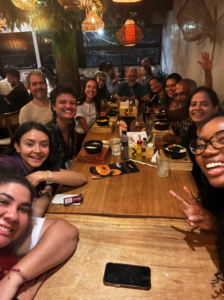
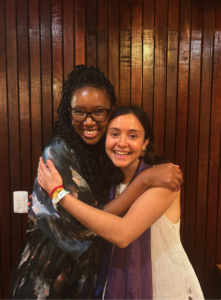
So, yes—part of me wants to criticise it. Not because I don’t believe in multilateralism, but because I now recognise how easily multilateral spaces can become rituals: annual gatherings where we learn to celebrate incremental progress while the Earth keeps crossing boundaries that don’t negotiate. Similarly, part of me wants to bless the fact that I got to meet Thobile, Marina, and other friends from WEAll. I am sure this would have happened anyway, but I guess the COP facilitated. And trust me, a few hours of in-person laughs made up for years of Zoom calls.
 .
. 
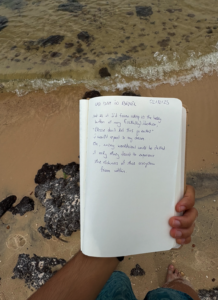
Most importantly, this COP has led me to make peace with the fact that we live in a world full of contradictions. On that slow boat to Marajó, I wrote on my journal:
“After endless questions,
and nobody with answers,
I finally allowed to receive, the kind of truth that will let me sleep:
See, this whole life is a huge contradiction,
… and then there’s death
but even that’s not the final jurisdiction.
Yet whatever you call ‘my occupation’
is just another rose-tinted illusion
giving the self some sort of identification
justifying all kinds of anthropocentric behaviours”
And after a deep sigh, I closed the notebook and promised myself to leave my ocean of doubts and bathe in the Amazonian waters of clarity.
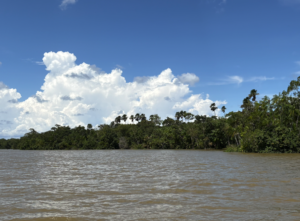
I found real peace deep into the rainforest. And real human connection with its peoples.
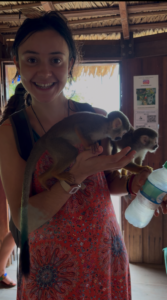
I visited Marajó, Alter do Chão, el Canal do Jarí and la Flona Tapajós (Igarapé de Jamaraquá) – neither my words, nor my pictures will be able to express how it felt like being in its presence. It all still feels insignificant compared to the vastness of the ecosystem.
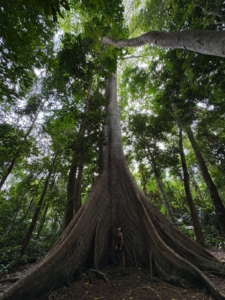
I wrote a poem during my last day…
“and as if I’d fallen asleep at the belly button of my Earthly Mother,
‘please don’t let this go extinct’
I would repeat in my dream.
Oh, many worldviews would be shifted
if only they dared to experience
the richness of this ecosystem
from within”
‘The Chiefs’ documentary shows it well: we have already lost 20% of the Amazon. Losing it completely could entail losing 10% of global biodiversity, and a fundamental part of ourselves.
I remember sitting at COP27, and having discussions about hosting the COP in Brazil. I remember saying at some roundtable: “if that is the case, maybe we should take the meetings and negotiations to the rainforest, sitting on the soil, in a circle”… because I genuinely feel, if our leaders and decisionmakers had taken the time to put their feet onto the land that sustains us all, perhaps our systems, policies, and relationships to one another would be very different.
I take advantage of the fact that I am a youth delegate to share these bold feelings.
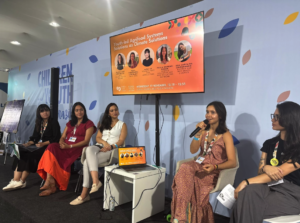
But in essence, it is a duty of care towards all those voices who are usually unheard in these spaces. In a year that finally allowed Indigenous peoples and local communities to participate in unprecedented numbers, this COP of the Amazon should be remembered not as a beautiful exception, but as the baseline for how climate spaces centre Indigenous leadership from now on. Above all, it is also a duty of care for all species on Earth.
May we become attuned to the rhythms of Earth. May we listen to the Indigenous peoples whose connection to the land is beyond what our minds can logically understand, and may we empower them enough to guide our decisions accordingly.
May we walk lightly, consciously and lovingly upon this Earth, honouring the soil and all beings with whom we share existence with.
the discussion?
Let us know what
you would like
to write about!