


Think about the last time you talked about an eco-social transition with people outside of typical activist circles. How did it go?
Did it go well, or was it more like this?

There are many organizations within the “new economies” space, as well as other environmental and social movements, that carry a very powerful message —one that also differs significantly from the prevailing mindset in our society. When they attempt to share this message with people who have never encountered it before, several major barriers often arise: the message may be misunderstood, fail to spark interest, be dismissed as naive or impossible, or even trigger rejection and hostility.
At WEAll Iberia, we are deeply concerned about this issue; we are investigating its root causes and, most importantly, exploring how the situation might be improved. We currently have several active projects:
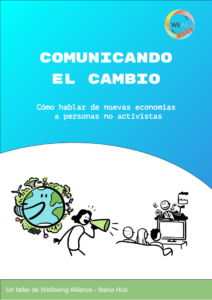
“Communicating Change” Workshop
Drawing from various sources, we have compiled documentation that outlines common obstacles encountered when communicating new economic models —such as the Wellbeing Economy, the Economy for the Common Good, Doughnut Economics, and the Social and Solidarity Economy— to the general public. We also examine how these concepts are perceived by different types of audiences and offer recommendations for overcoming these challenges in our communications.
The outcome is a workshop consisting of two 90-minute sessions. While we can facilitate this workshop ourselves, the materials are also publicly available, allowing anyone to host the session within their own community or organization.
Documentation from the sessions is also available, which can be read or shared independently:
- Understanding our audience. This section explains two fundamental concepts for communicating messages with social or political content to an audience. It also presents a study that outlines various audience profiles to help us understand how different people might react to our messages. → View the document here.
- Overcoming common obstacles. This section outlines a list of obstacles that frequently arise when discussing new economic models. It then offers proposals on how to address these challenges, including numerous links to external resources for further reading. → View the document here.
Wellbeing Economy Introductory Kit
Most existing documentation on “new economies” is aimed —more or less explicitly— at an audience that is already aligned with these ideas; it assumes a baseline level of knowledge and takes certain principles and values for granted. However, as highlighted in the workshop, there is a much broader audience that could be receptive to these messages but currently exists outside of that specific context. When such individuals are presented with this type of material, the issues mentioned above often arise.
At WEAll Iberia, we saw value in creating introductory material: something that could be shared with someone who has never heard of these concepts and comes from a different background, yet allows them to grasp the general idea of a “Wellbeing Economy.” Furthermore, if they become intrigued and wish to learn more, the material includes links to explore more in-depth content.
We currently have a website:
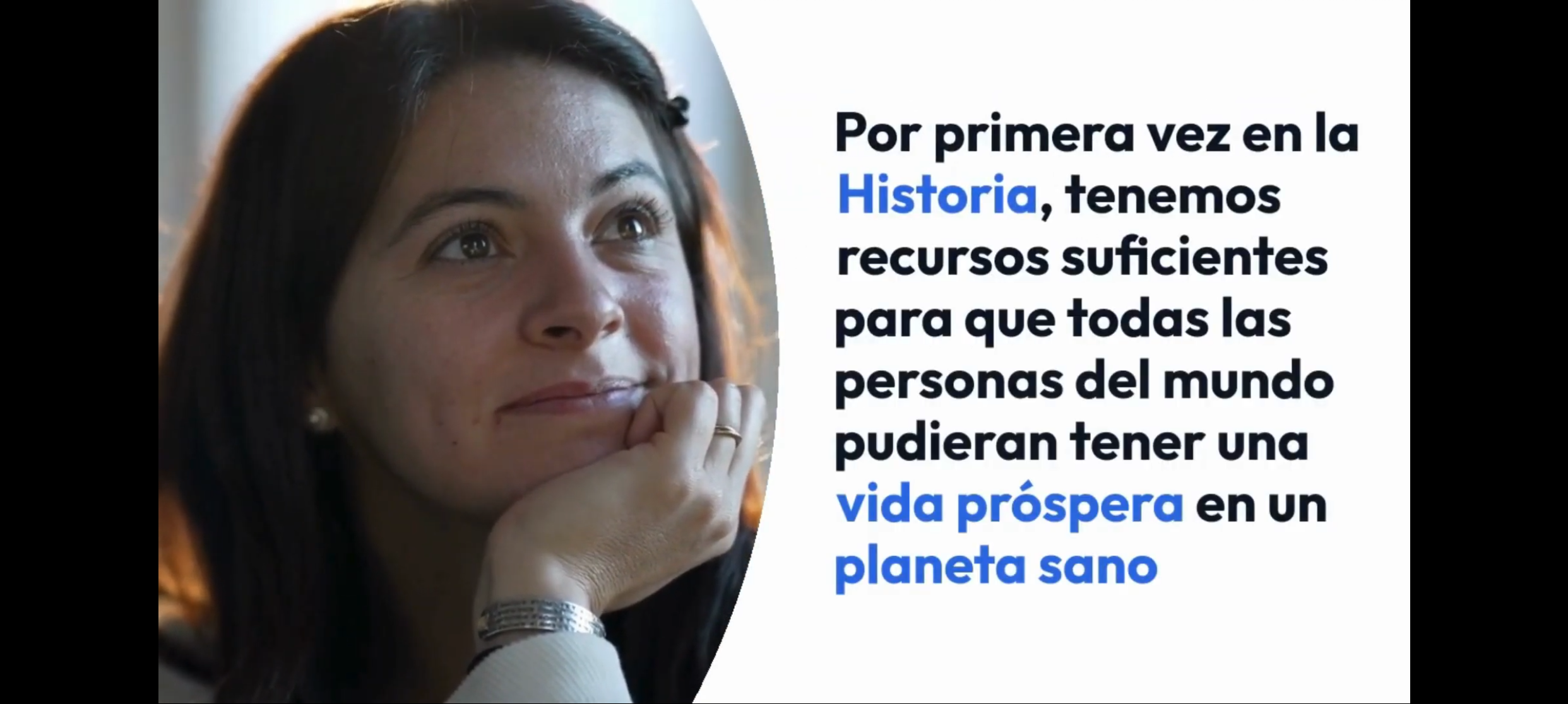
On this site, we apply the insights from our workshop to explain core concepts through videos, illustrations, and concise fact sheets, aiming to bypass the usual barriers to understanding.
For now, it is a draft that we are currently testing, sharing it with real people and noting their reactions and feedback. We use this input to refine the content, making it increasingly effective.
Other initiatives
There are many other organizations with projects that share similar goals. At WEAll Iberia, we want to keep a close eye on some of these —learning from their work, helping to share their content, and perhaps finding ways to collaborate with them in the future:
- Anti-Authoritarian Toolkit. A comprehensive toolkit for understanding how authoritarian power manages communication —and how to counter it. Featuring guides, podcasts, and videos, it offers a wealth of resources for organizing communication campaigns rooted in democratic values. → View here
- Hope: The Series. An award-winning Spanish documentary series that promotes the idea that a major global transformation —one capable of reversing climate change and building a better future— is still possible. Suitable for all audiences, it is fully aligned with the communication principles we explore here. → View here
- Laintersección.net. A communication laboratory that researches narrative-shifting techniques —much like those we work with here— and applies them to various topics, with a particular focus on diversity and inclusion. → View here
- porCausa. An organization focused on research and journalism, specializing in narratives surrounding migration. They aim to transform how migration is discussed and perceived, working to neutralize xenophobic messaging. → See here
- Spanish Revolution. A collective of journalists determined to confront hate speech where it is most prevalent: on social media. They create content with a progressive perspective, presented in viral formats accessible to a general audience. → See here