


Cooperativism and Cohousing: Towards a Transformative Social Housing Pact
Housing and social solutions
Human beings, social by nature, have always found ways to live in balance between their own privacy and autonomy, and mutual support within their kindred tribe.

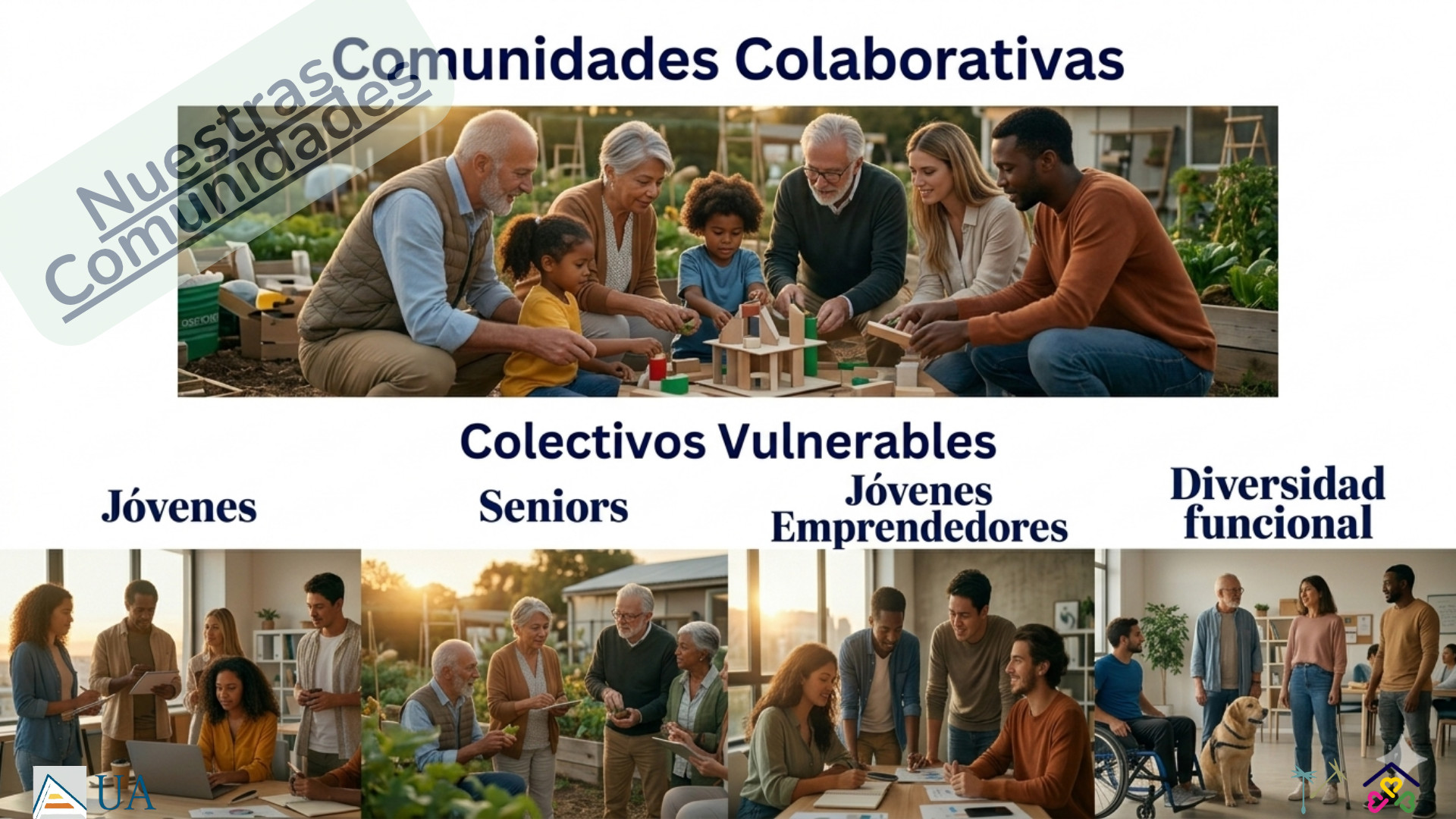
In recent decades, an economic system leaning toward individualism—following the “divide and conquer” principle—has led us into a life that is, paradoxically, one of isolation amidst a crowd! Once again, WeAll—in collaboration with Vida Sostenible Cohousing—focuses on the solution: reclaiming the joy of living among like-minded people, based on mutual support, while fully respecting individual autonomy and privacy. This is known as “cohousing” or “collaborative housing”—or, more precisely, collaborative communities consisting of private homes and shared services.
1. A Paradigm Shift: From Speculative Asset to the Right to Use
In the face of the current housing and climate crises, collaborative communities (cohousing) serve not only as a premier housing solution but also as a highly effective tool for collective resilience.
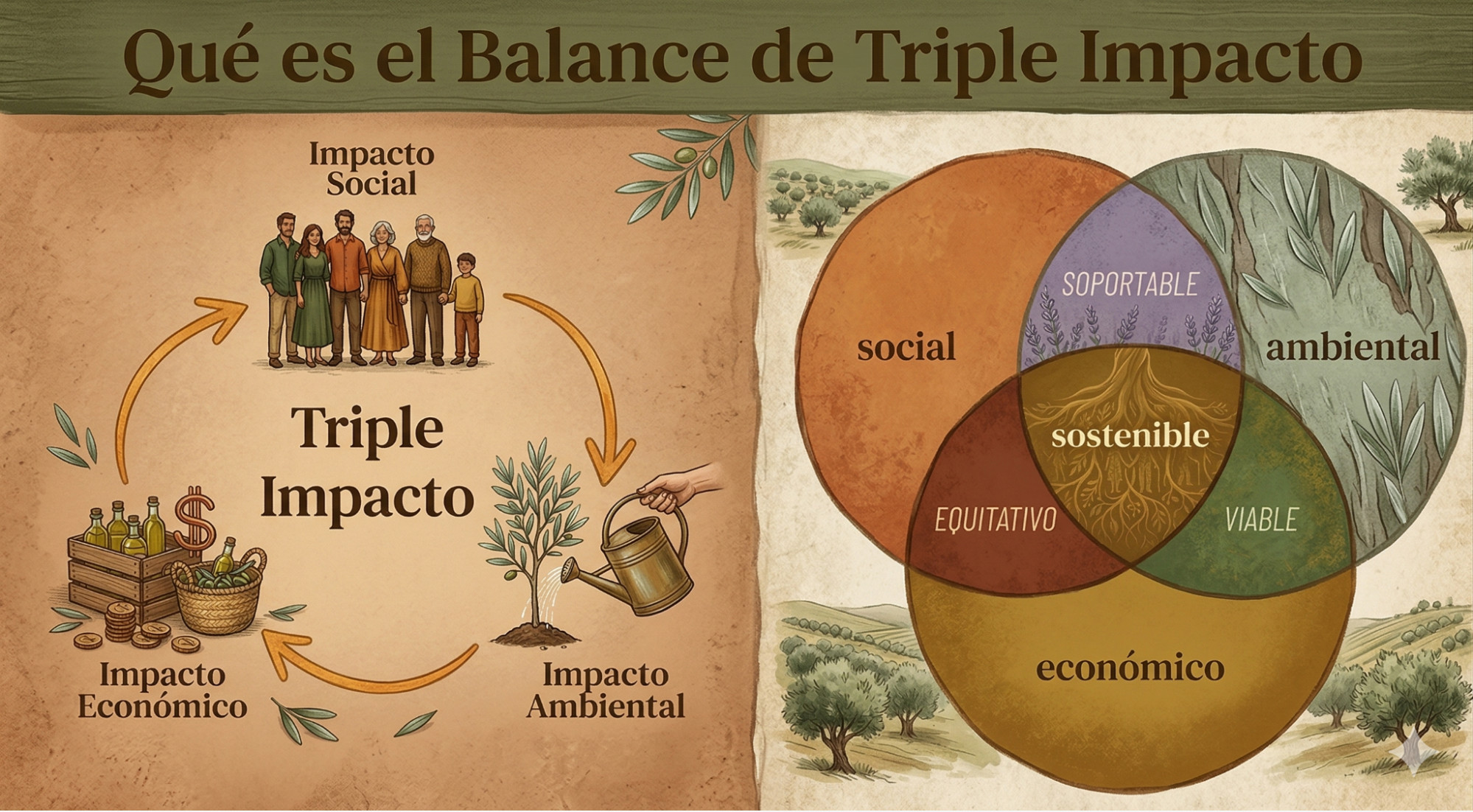
We propose these concrete elements that enable the creation of flexible models—where ownership is subordinated to use and communal living—aligned with the Triple Impact framework.
2. Typologies for its implementation
To ensure the chosen model is inclusive and more organic, we can select from these three implementation approaches:
- Right-to-Use Cooperatives: Ownership is collective (held by the cooperative), while members hold an indefinite right to use their units. This is the most robust model for preventing speculation and ensuring permanently affordable housing.
- Tenant Cooperatives (Self-Managed Rental): Groups that rent an entire building under collective management and professional oversight. This model is ideal for dense urban environments, combining the flexibility of renting with the security and democratic nature of cohousing.
- Private Cooperatives with Shared Services: Individual private ownership of housing units, combined with shared, undivided ownership of common areas and services. This serves as an intermediate step, facilitating a transition toward collaborative models within sectors traditionally characterized by individual private ownership.
3. Impacts of the Model: The Triple Balance
- Social Impact (Care and Coexistence):
- Eradication of unwanted loneliness: Designing spaces that foster organic interaction.
- Self-managed care: From shared child-rearing to end-of-life support (terminal care), reclaiming neighborly solidarity through sociocratic structures.
- Emotional cohesion: Group learning processes that reduce conflict and strengthen the social fabric.
- Environmental Impact (Genuine Sustainability):
- Reduction of the ecological footprint: Sharing services —such as laundry facilities, commercial-grade kitchens, tools, and vehicles— drastically lowers per capita resource consumption.
- Energy efficiency: Projects typically designed according to Passive House standards or using bioconstruction methods, optimizing the use of energy and water.
- Economic Impact (Efficiency and Savings):
- Economies of scale: Significant savings on utilities, maintenance, and shared services.
- De-commodification: Models that remove housing from the speculative market, ensuring fair prices in the long term deadline.
4. Management Tools: The “How” of what we do
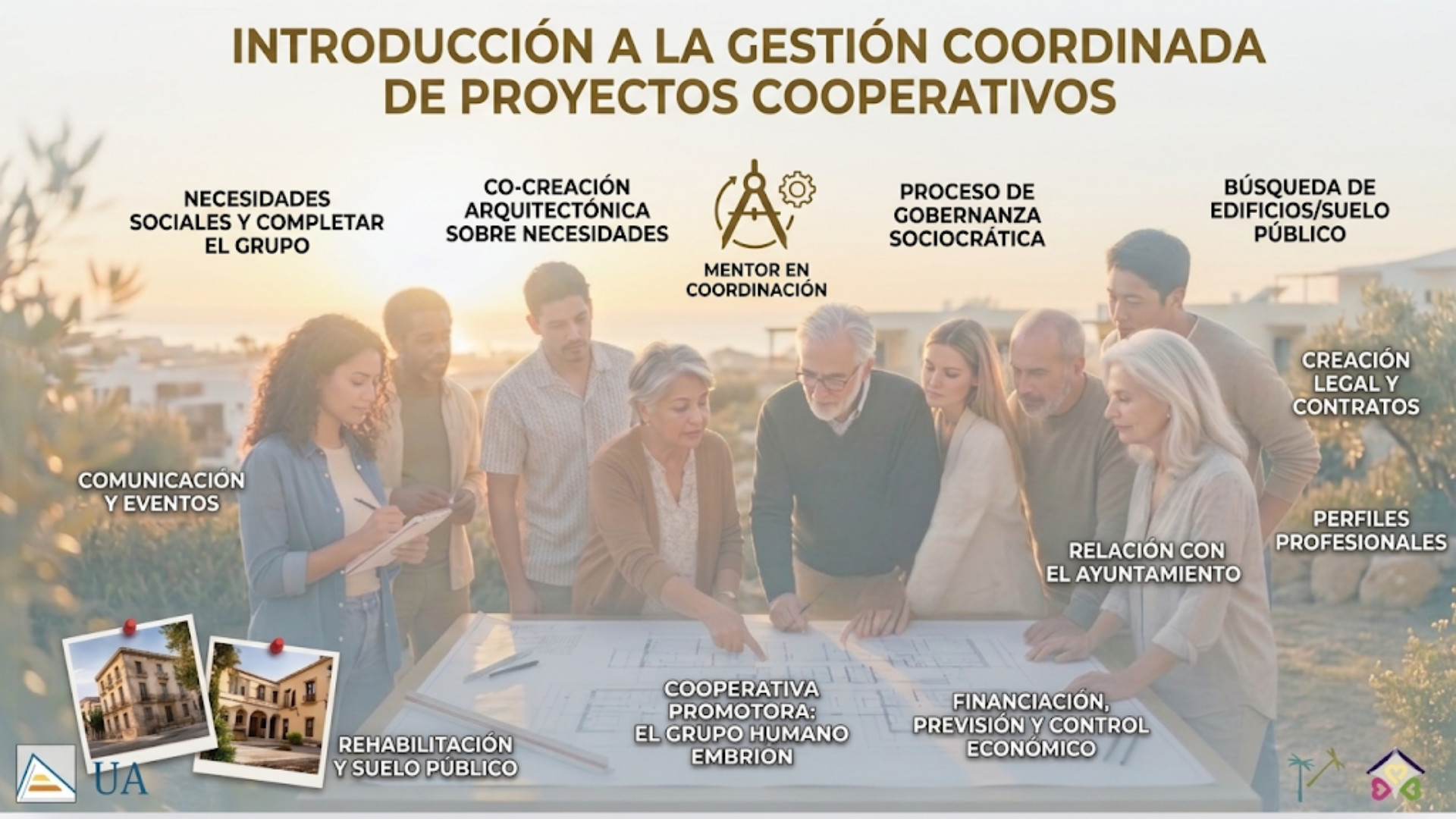
The success of these communities does not lie in the physical structures, but in the humanization of the environment:
- Sociocracy: For agile decision-making, where no one is ignored and effectiveness does not come at the expense of participation.
- Common Good Balance: Periodic evaluation of the project’s actual impact on the local community and the surrounding environment.
- Mutual support, co-care, and shared services: Ensuring privacy, autonomy, self-management of housing, and participation in shared services.
5. Conclusion
WeAll Iberia —along with the various channels and areas of expertise that enrich it— serves as a source of energy for promoting these models. It fosters awareness regarding the allocation of public land, favorable tax treatment for social economy entities, and the development of regulatory frameworks that recognize collaborative housing as a good of general interest.
We are not constructing buildings; rather, through concrete projects —working from the ground up— we are refining the world in which we wish to live.
Links of interest:
- Cohousing projects currently in operation in Spain: EntrePatios (intergenerational, Madrid), Laborda (Barcelona), Trabensol (senior-focused, Madrid).
- Specialized media outlets: Vivirencohousing, Construnews.
- Examples of projects with support for direct management: Olivar Plaza (Seville) Comunidad del Sol (Madrid).
- University of Alicante course on Housing Solutions for Collaborative Communities.